
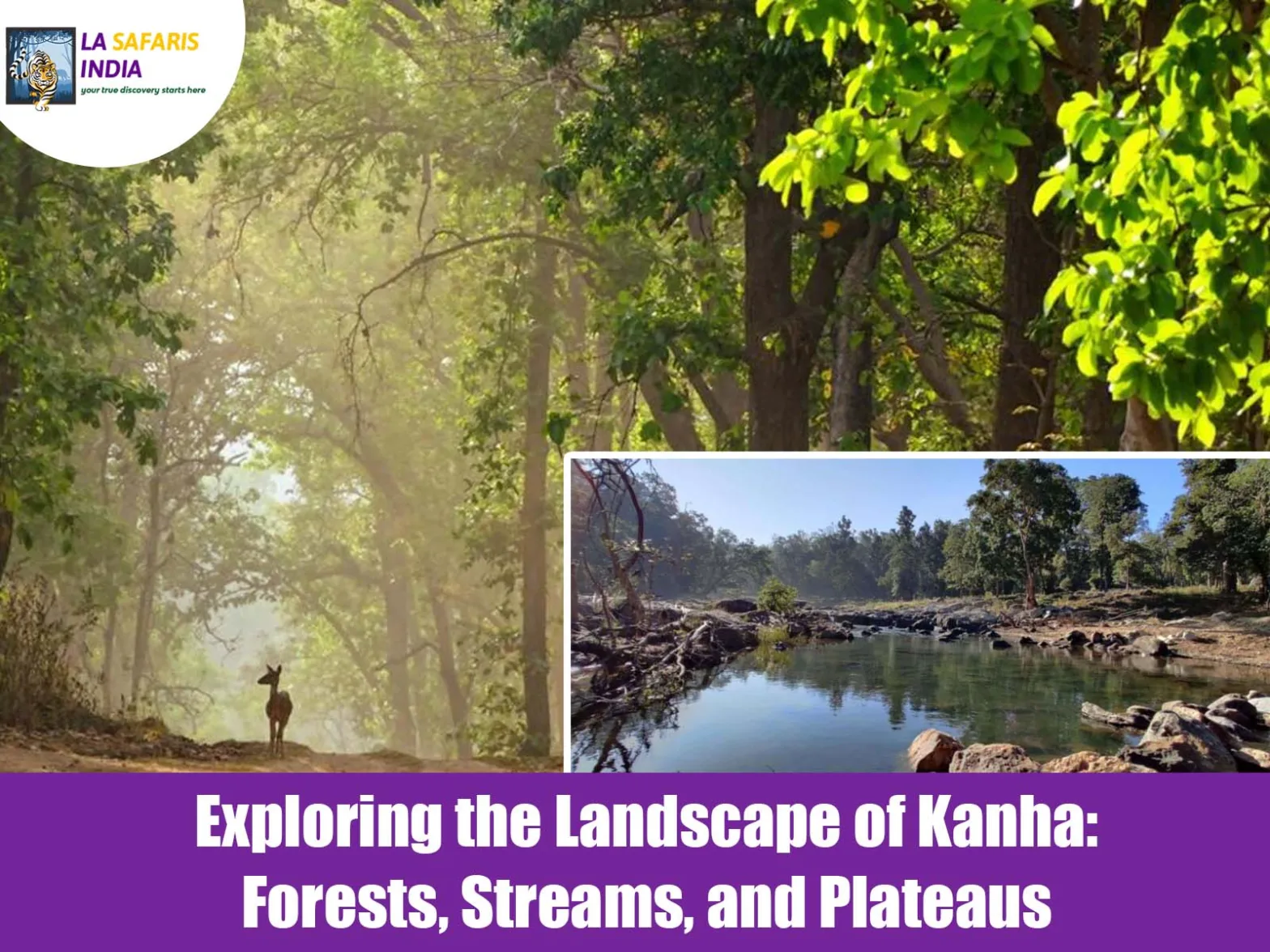
Exploring the Landscape of Kanha: Forests, Streams, and Plateaus
For nature tourism, there is hardly any spot in India as quaint and bio-diverse as Kanha National Park. Located deep in the heart of Madhya Pradesh, Kanha is a renowned wildlife sanctuary and a destination of choice among those looking for fully interactive nature safari tours Its blended terrain of thick forest cover, rolling streams, and open plateaus offers an pristine backdrop for once-in-a-lifetime experiences with the wild.
The Forests: Dense and Lush
Kanha’s forests are dominantly composed of wet deciduous forests over which sal and bamboo have the upper hand. Sal and bamboo forests are dense ones that are home to a rich diversity of wildlife such as Bengal tigers, leopards, Indian bison, sloth bears, and the hard-ground barasingha, which has been reported to be brought back from the verge of extinction by Kanha.
Roaming or cruising across these patches of forests on a safari, one is presented with a feeling of great closeness to nature. The crunching of leaves, jungle noises, and earthy smell all come together to form an atmosphere so calm. These forests are of great importance to the health of the environment of the area, providing shade and sustenance to dozens of species.
The Streams: Lifelines of the Jungle
There are a few perennial and seasonal water bodies like the Banjar and Halon rivers distributed around Kanha. These streams support the park’s vegetation and wildlife during dry summer seasons. These streams are favorite watering places for animals, and thus they are among the best sites for trapping wildlife.
Most of the kanha safari tours purposefully go out of their way in the vicinity of these streams in a bid to maximize the chances of witnessing wildlife in motion. Ranging from troops of water-guzzling spotted deer to birds such as kingfishers and egrets that are actively stalking along the shore, the streams’ vicinity is filled with activity. The gentle tinkle of flowing water, in addition to a pleasant creaking wood and bird call symphony, provides a thrilling and invigorating safari experience.
The Plateaus and Meadows: Open and Panoramic
Apart from the thick forests and serpentine streams, it also has lovely meadows and plateaus. These grasslands, like the famous Bamni Dadar, are used for grazing by herbivores like chitals, sambars, and barasinghas. Visibility is perfect here with great chances of seeing animals at far distances.
Early mornings and late afternoons are the times the grasslands live as animals emerge into the open, typically trailed in silence by hunters in pursuit of their quarry. For visitors to the safari, the experience is one of the excitement of viewing the untrammeled dynamics of nature in a stunning landscape.
Conclusion
Kanha’s varied topography is more than a tiger reserve—it is a living and vibrant entity in which plateaus and streams and forests exist to host an astonishing array of wildlife. A professional photographer, a keen wildlife enthusiast, or an amateur, Kanha provides an experience that will be forever imprinted in its rich natural heritage. If you are looking to go for nature safari tours in India, Kanha would be the place you must visit because of its distinctive landscape and rich life